


The Stepford Wives (and Husbands) of 2026
We're paying for the privilege of being turned into robotic versions of ourselves.
The Stepford Wife is alive and kicking. So too is her counterpart, the Stepford Husband.
And they're EVERYWHERE.

The Rise of Stepford Syndrome
Come on, you've seen them. How can you not?
The perfectly polished LinkedIn posts. Those oh-so-fake dead-eyed Zoom smiles.
Groundbreaking AI-generated “thought leadership” (at least, that's what ChatGPT told them it was) written in the exact same emotionally beige tone as everyone else on the internet.
NOW you know what I mean.
Everything done oh-so-perfectly. Every sentence is optimized and every opinion is sanitized so as not to ruffle any feathers. Even the personality is ironed flat in the name of sounding “professional.”
And there is just so much of what I'm calling Stepford Syndrome out there. Quantity has certainly won the battle over quality.
The Internet is Drowning in Artificial "Authenticity"
And speaking of quality, our BS meters are working overtime to sniff out AI-generated content. Admittedly, some of that content is pretty good, like the funny videos that spill across my feed spoofing the news of the day.
Too much, though, is dreck.
Especially the posts, comments, and emails, newsletters, and whatnot clogging up our inboxes.
People are beginning to reject AI-generated content that masquerades as human-made. It's one thing to watch a parody that we know and accept as AI. It's another to be inundated by poor writing and flat ideas pretending to pass themselves off as original thought.

We know the outward signs, particularly the em dash and the overuse of the "rule of three."
It's a real shame, too, because human writers now feel like we have to avoid the em dash — which has a perfectly legitimate purpose — and vary lists to four or five items, even though human beings naturally group things in threes. We simply find groups of three naturally more memorable, engaging, and persuasive.
By the way, this blog is 100% human-written. I hope you can tell.
And yes, I deliberately poked the bear by using em dashes and a group of three in the last paragraph. Just my ironic sense of humor.
Anyways, back on point:
I'm not a Luddite. I genuinely love technology and find AI fascinating. Hey, my first career was in the tech industry and I did my share of coding.
When Professionalism Kills Connection
But somewhere along the line, a lot of professionals started confusing polish with connection. And those are not the same thing!
I felt I had to speak up, first as a former sales executive who began her career overly concerned with polish instead of connection (which absolutely cost me sales), and second, as an actor and communication strategist who works in media all the time.
Connection is king; it's the basis of the whole "know, like, and trust" axiom of succeeding in business.
The Biggest Communication Mistake Professionals Make
As a trainer and coach, I spend a lot of time helping entrepreneurs, executives, and speakers come across as believable on camera, on Zoom, in business presentations, and in high-stakes conversations.
And one of the biggest mistakes I see is this:
People try so hard to sound smart, credible, strategic, polished, insightful, visionary, and “executive” that they accidentally stop sounding human altogether.

The Panic to Sound "Executive"
You can practically see the internal panic happening in real time:
“Must sound authoritative.
Must maintain leadership presence.
Must not accidentally reveal personality.”
It's like a mantra.
Meanwhile the audience is quietly dying inside.
Why Imperfection Feels More Trustworthy
We crave human interaction and the mess and imperfection that goes with it.
It's far more relatable and interesting than polished perfection, especially when we can see firsthand how the speaker or presenter handles the situation and turns a potential catastrophe into success.
What Real Human Communication Actually Sounds Like
So what are the signs of actual humanity?
In written, visual, or audio communication, the markers are:
warmth
spontaneity
humor
emotional intelligence
specificity
imperfections
genuine reactions
original thought

In other words, the very things most people have been trained OUT of in corporate communication.
Storytelling is at the core of just about every type of communication. We naturally gravitate to stories and find them easiest to remember, because good storytellers take us on the emotional journey with them.
The Exhausion of Performing Professionalism
The reason why so many professionals feel exhausted right now — that their presentations, videos, and sales calls just aren't working anymore — is because they’re performing "professionalism."
That's right.
Forced professionalism all day on Zoom, Teams, LinkedIn, videos, calls, webinars, etc.
It's sad really.
Everyone is trying desperately to look competent, when in actuality, they're sounding like they swallowed a leadership podcast whole.
And having trouble digesting it.
We can hear the burps in communication.
Audiences Can Feel Incongruence Instantly
It's called incongruence, and human beings are unbelievably good at detecting it.
We know when someone is technically saying the right words, but emotionally disconnected from what they’re saying.
Actors know this instinctively.
We're (often painfully) aware that audiences don’t connect to perfection; they connect to truth. And if the truth of a performance is missing, so too goes the audience.
They just don't care.

Why Perfect Branding Still Falls Flat
That’s why someone can have flawless credentials, gorgeous branding, media training, perfect lighting, and professionally written messaging… and still somehow feel completely forgettable.
There’s just no pulse underneath it.
There's no humanity, no sense of being alive, and certainly no surprise to jolt us away from scrolling on our phones.
Why should we bother?
It's just another beautifully polished wax figure smiling into a webcam. A Stepford Wife (or Husband) with presumably nothing truly original or startling to say.
But what if there actually is a great message behind the polished but boring facade?
It's often lost.
You can have the best content in the world, but if your delivery is flat and downright boring, very few people will be paying attention.
And that costs you sales.
The Solution to the Stepford Syndrome
Ironically, though, AI just may be the catalyst that forces us back toward becoming better humans.
Once generic content becomes infinite,
the people who stand out are the ones who actually sound alive.
The ones with opinions.Timing. Humor. Presence. Personality. Believability.

Believability is the New Competitive Advantage
That’s the word I keep coming back to lately:
Believable.
Not polished.
Not optimized.
Not “personal brand aligned.”
Simply: Believable.
Because believable people build trust.
And trust is what gets you hired, referred, remembered, promoted, followed, and chosen.
Not perfection.
Believability.
So if your content, videos, presentations, or online presence are starting to feel strangely robotic lately, maybe don’t ask:
“How do I sound more professional?”
Maybe ask:
“Do I still sound like a human being?”
That question might matter a whole lot more moving forward.
✨ Upcoming Event ✨
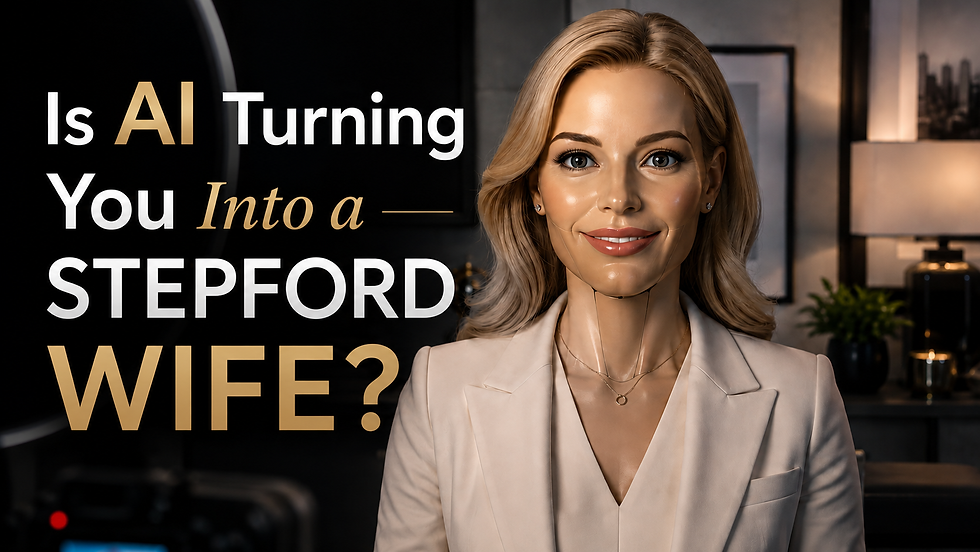
Is AI Turning You Into a Stepford Wife?
How to stay human, build trust, and stand out in a world of artificial everything.
Tuesday, June 23
2 pm EST / 11 am PST
I'm Laura Doman, a voice & TV/film actor and video communications coach. As an actor, I create memorable characters that tell my client's stories well, from the friendly CEO to your sassy best gal pal dispensing real-world advice. As a coach, I help you become more comfortable and charismatic on camera in videos, presentations, and online appearances.


